
UV DTF Paper A Film
Application-Driven Choice for Controlled UV DTF Transfer
Paper-based release film designed for specific UV DTF applications where handling control and stiffness matter more than transfer smoothness.
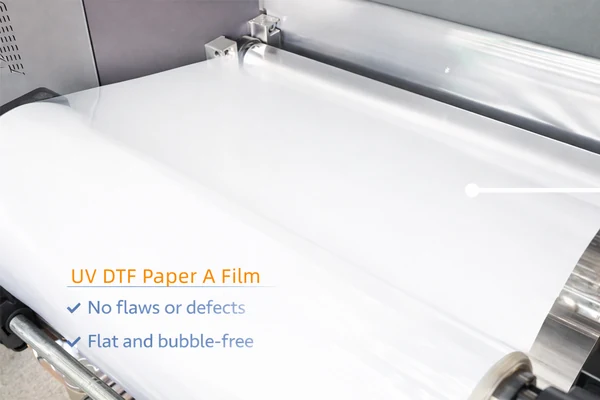
The Right UV DTF Applications on Transparent Objects
Understanding Paper A Film in UV DTF.Paper A Film is commonly selected for glass, acrylic, and clear plastics,where stable ink laydown and predictable visual results are required.Its stiffness and controlled release characteristics make it suitable for certain manual and creative UV DTF applications.
Best suited for clean, flat visuals on transparent substrates.
Material Structure of Paper A Film
Paper base A Film uses a specially selected paper substrate combined with a functional release coating. The structure provides sufficient mechanical strength for printing and lamination, while maintaining reliable release behavior during UV DTF cold transfer workflows.
Base Material
Double-coated paper (single or double copper paper)
Lamination
Dual-side PE coating
Release Layer
Silicone release coating
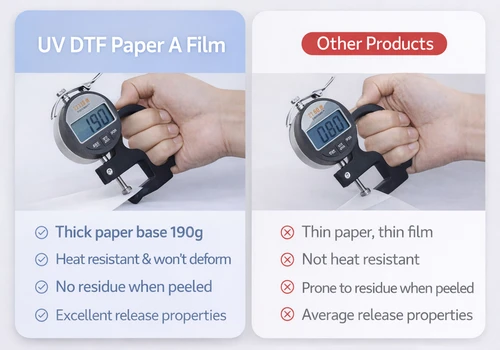
What are the superior characteristics of our Paper A Film?
Designed to support continuous production runs with minimal adjustment and stable output.
Good rigidity and flatness
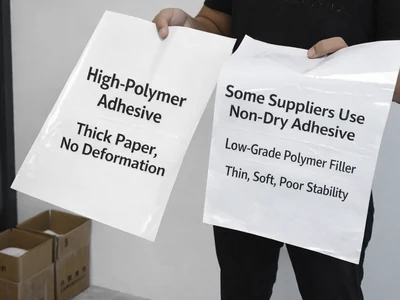
190 GSM paper base, with thickness, non-deformable
Premium Paper Base
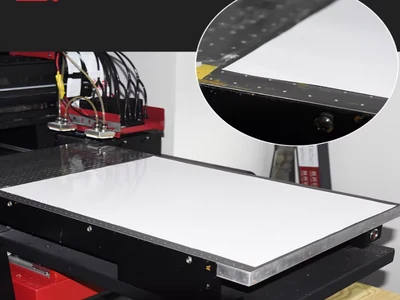
No curling or warping during printing
Reduced Coating Residue
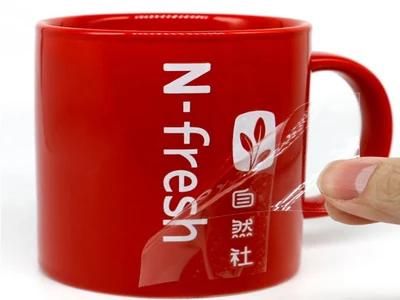
Minimized risk of coating residue on final products
UV DTF Printing Workflow Snapshot
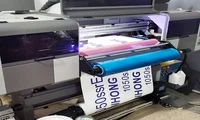
Printing
UV ink is printed directly onto the Paper A Film surface.
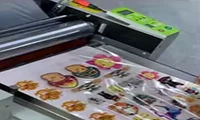
Lamination
The printed image is laminated with B Film to prepare for transfer.
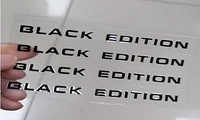
Cold Transfer
The image is transferred smoothly without heat, maintaining production efficiency.
Supporting Note: Paper A Film integrates seamlessly into standard UV DTF cold transfer workflows without requiring special adjustments.
Paper A Film vs PET A Film
Application-focused comparison to help you choose the right UV DTF A film for your production needs and workflow requirements.
| Application Aspect |
PET A Film
Professional Grade |
Paper A Film
Creative Grade |
|---|---|---|
|
Transfer Smoothness
Consistency in transfer process |
★★★★★
Excellent
|
★★★★★
Good
|
|
Manual Control
Ease of manual handling |
★★★★★
Moderate
|
★★★★★
Excellent
|
|
Continuous Production
High-volume manufacturing |
★★★★★
Excellent
|
★★★★★
Limited
|
|
Fine-detail Graphics
Precision and detail quality |
★★★★★
Excellent
|
★★★★★
Good
|
|
Creative & DIY Use
Small batch and custom projects |
★★★★★
Limited
|
★★★★★
Excellent
|
PET A Film - Best For:
- High-volume production environments
- Detailed graphics and professional applications
- Consistent transfer quality requirements
Paper A Film - Best For:
- Manual operation and creative projects
- DIY and small batch applications
- Easy handling and user-friendly workflows
Transfer Behavior Characteristics
Because paper is thicker than PET, you need to be more careful when transferring labels with small lines to ensure they are smoothly applied to objects.
But in application,paper a film have the different features.
Less elastic than PET during transfer
More controlled peeling behavior
Suitable for accurate positioning
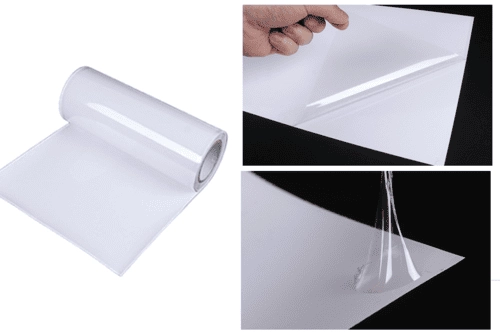
When Paper A Film Makes More Sense Than PET
Application Scenarios Where Paper A Film Performs Better
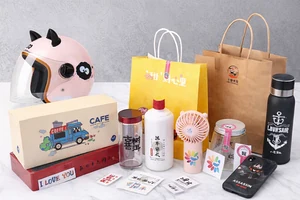
Greeting Cards & Event Decorations
Birthday cards, invitation cards, festive decorations, and customized paper-based products.
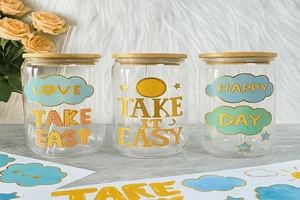
Manual Craft & Hobby Projects
Studios, workshops, and hobby applications that rely on manual or semi-manual transfer.
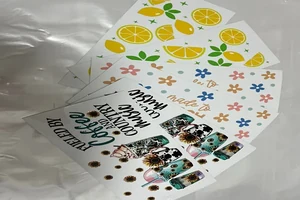
DIY Stickers & Creative Labels
Handmade stickers, decorative labels, and small creative projects.where manual control is important.
Storage & Handling
Environment
Store in a dry, ventilated environment
Conditions
Avoid direct sunlight and excessive humidity
Warehouse
Maintain stable temperature conditions
Supporting Note: Proper storage ensures consistent release behavior and stable production results.
Not Sure Whether UV DTF PET or Paper A Film Fits Your Application?
Request PET & Paper Sample Comparison,both of them are ideal for high-volume production requiring consistent quality and cost efficiency.
Cost-efficient solutions for professional UV DTF production