
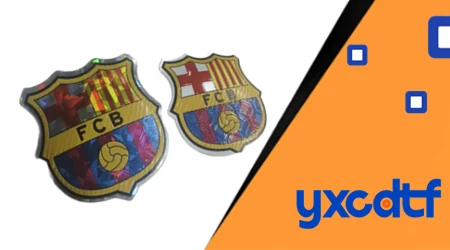
For professional apparel printers and manufacturers, decoration methods are evaluated not only by visual results, but also by production efficiency, process stability, and long-term durability. As demand grows for refined branding elements and faster turnaround times, textile UV DTF vinyl is gaining attention as a practical solution across multiple garment and accessory categories.
Compared with conventional heat transfer vinyl and standard DTF printing, textile UV DTF vinyl introduces UV-curable printing into transfer applications. This enables precise details, textured surface effects, and improved workflow efficiency for a wide range of apparel and soft goods.
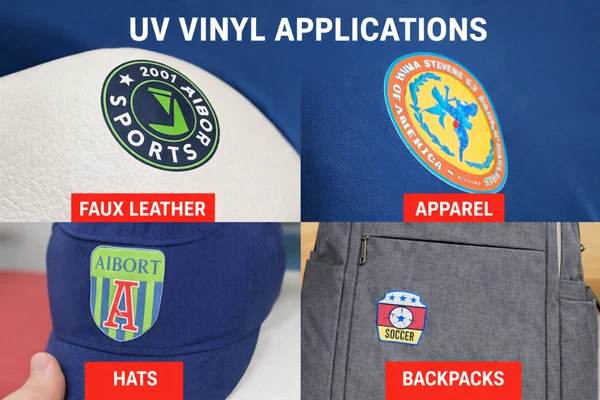
What Is Textile UV DTF Vinyl?
Textile UV DTF vinyl is a transfer-based printing solution1 that uses UV-curable inks and adhesives to build graphics on a release film, which are then transferred onto fabric surfaces.
Unlike traditional DTF processes that rely on heat-activated powder adhesive, UV DTF printing2 cures each ink and adhesive layer instantly using UV light. This allows for controlled thickness, sharp edges, and stable layer structures—all essential for consistent production in professional manufacturing environments.
The Basic Working Principle of UV DTF on Fabric
From a production perspective, the textile UV DTF process consists of three repeatable stages:
-
Printing and UV curing
Designs are printed layer by layer onto UV DTF film using UV inks and adhesive. Each layer is cured immediately to ensure dimensional accuracy and texture consistency. -
Transfer preparation
The printed graphic is laminated or prepared as a finished transfer with controlled adhesive performance. -
Application to fabric or surface
The transfer is applied using pressure, with minimal or controlled heat depending on the substrate. The carrier film is removed after bonding, leaving the graphic securely attached.
This process reduces heat stress and improves efficiency compared to traditional heat-based decoration methods.
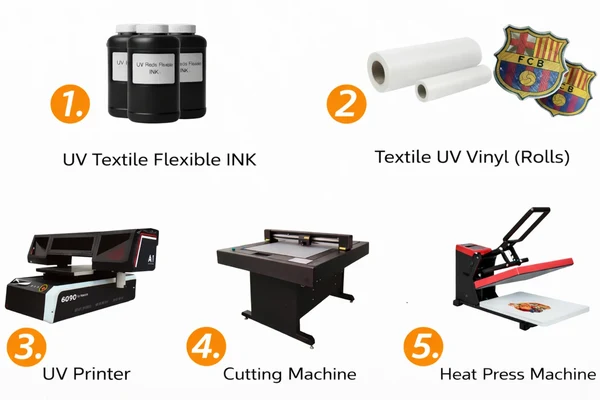
How Textile UV DTF Transfers Are Applied in Production
In real production environments, textile UV DTF transfers1 are applied through a straightforward workflow:
- Accurate positioning of the transfer
- Controlled pressure to ensure adhesion
- Removal of the carrier film after bonding
- Optional post-pressing when required by the material
This process is especially suitable for factories handling multiple SKUs, frequent design changes, or customized orders.
Why UV DTF Works Well for Apparel and Functional Textiles
Many apparel and accessory products use synthetic fabrics, coated surfaces, or mixed materials that are sensitive to heat or difficult to decorate using conventional methods.
Textile UV DTF1 offers several advantages:
- Reduced heat exposure
- Strong adhesion on smooth and semi-coated surfaces
- High-definition graphics for logos, numbers, and branding
- Stable positioning with minimal distortion
These characteristics make UV DTF suitable not only for garments, but also for functional textile products.
Typical Applications in Apparel and Soft Goods Production
In apparel manufacturing and decoration, textile UV DTF is commonly used for:
- Sports jerseys and team uniforms (numbers, names, logos)
- Workwear and industrial uniforms requiring durable branding
- T-shirts and casual apparel for logos and decorative details
- Bags and backpacks, including coated or mixed-material surfaces
- Caps and hats, where curved or structured areas limit traditional printing
- Shoes and footwear, especially for logos and small branding elements
These applications typically involve logos, numbers, and detailed graphics rather than full-coverage prints, where UV DTF delivers the most consistent results.
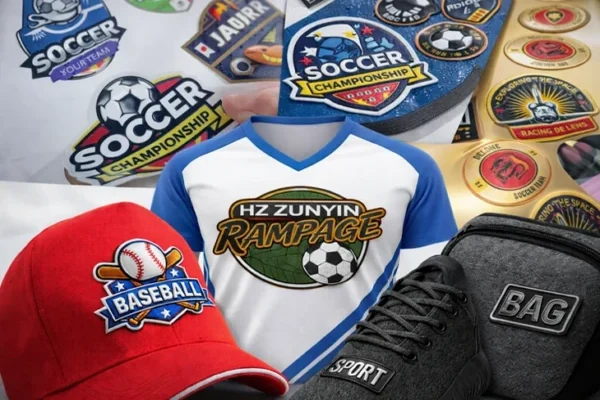
Fabric Compatibility and Application Considerations
Textile UV DTF performs well on:
- Cotton and cotton-blend fabrics
- Polyester and synthetic materials
- Coated or semi-coated textile surfaces
- Moderately elastic materials used in sportswear and footwear
Due to variations in surface texture and flexibility, pre-production testing is recommended for new materials or applications.
Durability: Wash Resistance and Wear Performance
When applied correctly, textile UV DTF transfers can provide:
- Reliable wash resistance for daily and professional use
- Stable color performance due to UV-cured ink layers
- Controlled flexibility that balances texture and comfort
Durability depends on correct film selection, adhesive formulation, and proper application parameters rather than the technology alone.
3D UV DTF vs Traditional 3D Heat Transfer Emblems
From a manufacturing standpoint, textile UV DTF is best compared with traditional 3D heat transfer1 emblem and badge processes.
Conventional 3D heat transfer often involves multiple steps, longer production cycles, and higher material waste. In contrast, 3D UV DTF vinyl solutions2 streamline production, improve efficiency, and reduce waste while offering more flexible design options.
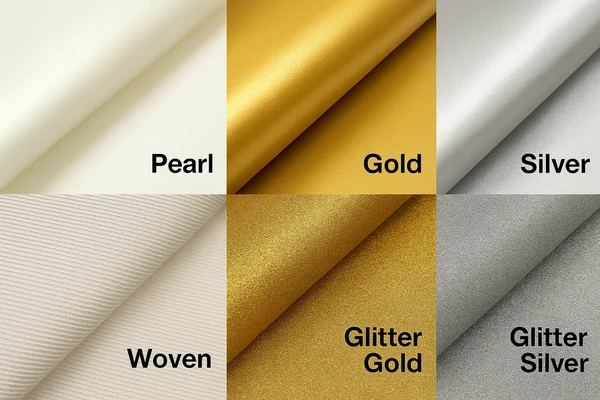
UV DTF enables a wide range of surface effects, including:
- Glossy and high-shine finishes
- Embroidery-like raised textures
- Metallic effects
- Glitter surfaces
- Woven or fabric-simulated textures
These effects are difficult or costly to reproduce consistently using traditional techniques.
Limitations and Practical Considerations
Textile UV DTF is not intended to replace all decoration methods. Key considerations include:
- Not suitable for large full-coverage designs
- Proper adhesive–substrate matching is essential
- Process control is required for batch consistency
Professional manufacturers benefit most when UV DTF is integrated as part of a broader production strategy.
Future Trends of UV DTF in Apparel and Accessories
As the industry continues to prioritize efficiency, customization, and material flexibility, 3D UV DTF is increasingly adopted across apparel and accessory production.
For manufacturers and distributors, understanding where UV DTF offers clear advantages—in garments, bags, caps, and footwear—will be key to long-term competitiveness.
Conclusion
Textile UV DTF vinyl provides a practical and efficient solution for decorating apparel and soft goods, particularly for logos, numbers, and textured branding elements. By improving efficiency, reducing waste, and enabling diverse surface effects, 3D UV DTF represents a meaningful evolution beyond traditional 3D heat transfer processes.
When evaluated and applied correctly, textile UV DTF vinyl for apparel and accessories can become a reliable part of a professional manufacturing workflow.